Mata Electrical · MATAEES758OR
EV Charger Installation in Snohomish and King County
A Level 2 charger needs its own dedicated 240-volt circuit. We size the circuit to your car, run it cleanly from the panel to where you park, and pull the permit and inspection so it's done right.
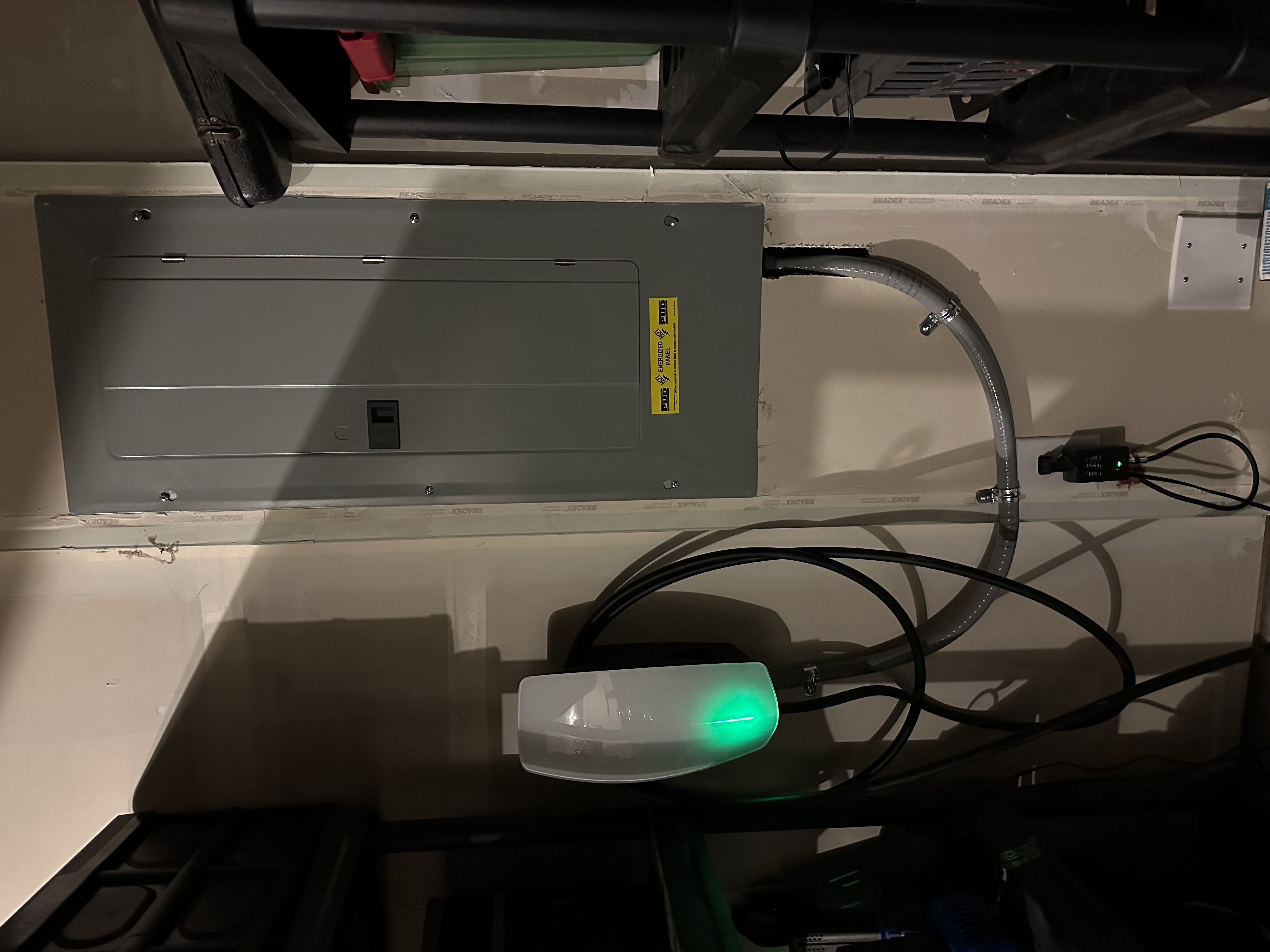
Real work, installed safely and to code.
Hardwired Tesla Wall Connector energized and running with dedicated flex conduit to main service panel.
Dedicated 60-amp circuit with liquidtight conduit run directly from the main panel, delivering maximum 48A charging speed safely and to code.
What this actually involves
Charging an EV off a regular wall outlet is Level 1 - slow, and fine for plug-in hybrids or short commutes. A Level 2 charger needs its own dedicated 240-volt circuit, the same kind an oven or dryer uses, and charges most EVs overnight.
The job is really about the circuit, not the box on the wall. We size the circuit to your car's onboard charger, run a clean line from the panel to where you park, and make sure the panel can actually carry the extra load.
The biggest cost driver is almost always the distance from the panel to the parking spot. A charger in a garage next to the panel is a short run. A charger out at the end of a driveway is a long trench or a long run through the house.
Chargers come hardwired or plug-in. Hardwired is common for higher-amperage units and outdoor installs; plug-in lets you take the unit with you if you move. We pull the permit and schedule the inspection either way.
Signs you need this
- You just bought or leased an EV and you're charging off a wall outlet.
- Your current charger trips the breaker when it runs.
- You're building a garage or driveway and want the circuit roughed in now.
- Your panel is full and you're not sure it can take a 40- or 50-amp circuit.
- You want a charger outdoors and need it done to code.
What affects the job
Price depends on what we find when we come out. These are the real variables for ev charger install - knowing them makes the estimate call easier.
- Distance from the panel to the parking spot - the single biggest factor.
- Whether the panel has a free slot and the capacity for the circuit.
- Hardwired versus plug-in charger.
- Indoor garage mount versus outdoor, which needs weather-rated gear.
- Whether trenching is required for an exterior run.
What to have ready
- 01The make and model of your EV, or the charger you plan to buy.
- 02Where the panel is and where you park.
- 03Whether the parking spot is in a garage, carport, or open driveway.
- 04A photo of the panel with the door open.
Frequently asked questions
Do I need a 200-amp panel for an EV charger?
Not always. A 40- or 50-amp charger circuit can often fit on a 100-amp panel if the rest of your load is light. If the panel is full or the load calculation says there isn't room, we'll tell you a panel upgrade is needed before the charger goes in.
Hardwired or plug-in?
Hardwired is standard for higher-amperage and outdoor installs and avoids a GFCI breaker nuisance-tripping issue some plug-in units have. Plug-in lets you swap or move the charger. We'll recommend based on your setup.
Can I install the charger myself?
A 240-volt EV circuit is permitted work and carries enough current to be dangerous. It needs to be sized, run, and inspected correctly. We handle the install, the permit, and the inspection so it's safe and legal.
How far can the charger be from the panel?
As far as the wire run allows, but voltage drop and cost go up with distance. Long runs need larger wire. That's why the distance from panel to parking spot is the main thing that drives the price.
Related services
Get a free estimate
Tell us what you need and where you are. We come out, look at the job, and give you a real number.
Prefer to talk? Call (425) 555-0142, monday-friday, 8:00 am - 5:00 pm pacific.
If you are seeing sparks, smell something burning, or your panel feels hot, stop and call us right now at (425) 555-0142. Do not use this form for an emergency.