Mata Electrical · MATAEES758OR
Generator & Backup Power in Snohomish and King County
PNW storms knock the power out for days. A standby generator with a transfer switch keeps your heat, fridge, and well pump running, or an interlock kit lets you backfeed essentials from a portable unit.
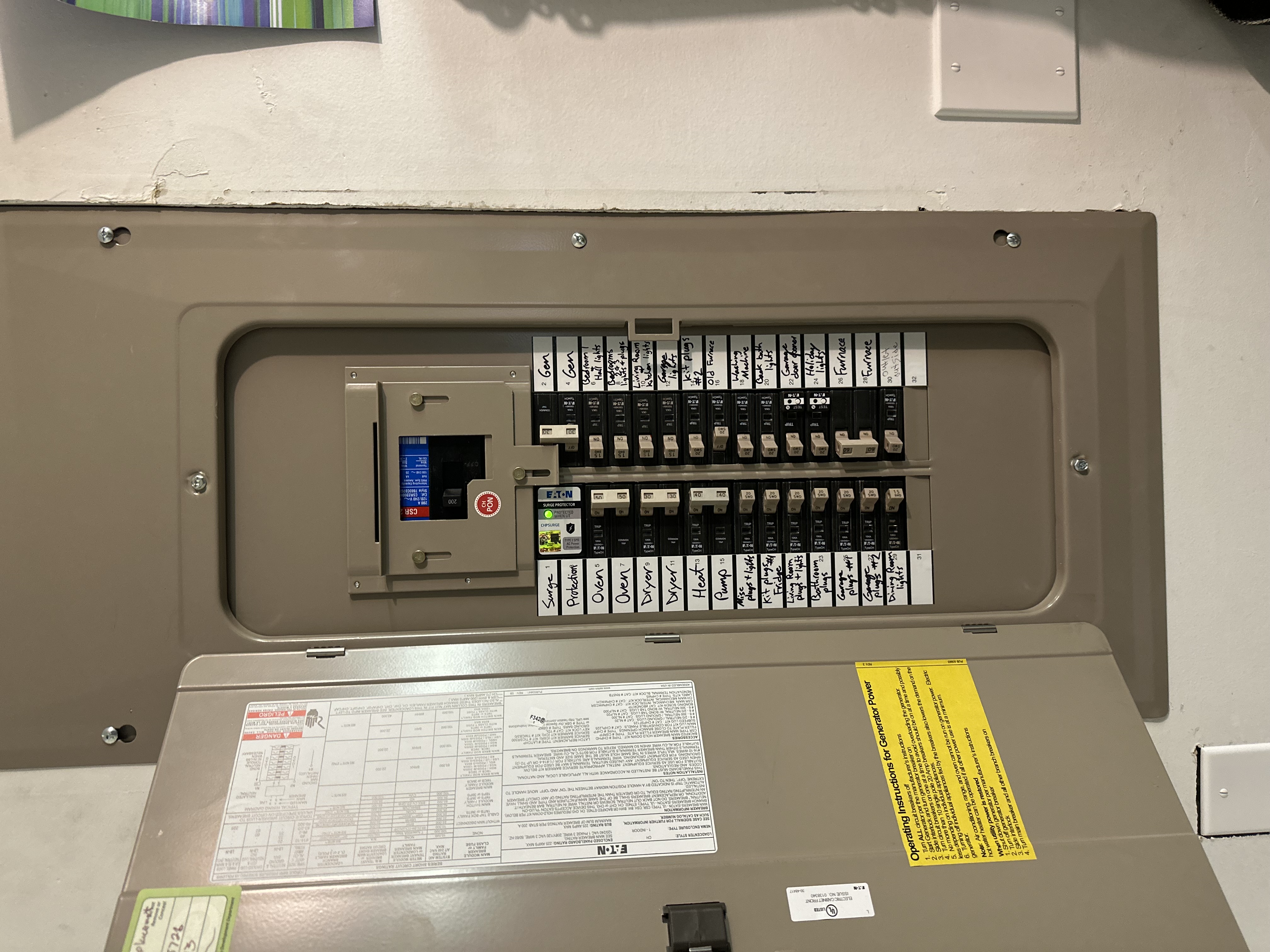
Real work, installed safely and to code.
Panel interlock kit installation with designated generator backup circuits.
Mechanical interlock ensures utility power and generator backfeed cannot be on at the same time, with marked operating instructions on the panel door.
What this actually involves
In the PNW, storms take the power out for hours or days. A backup system keeps your heat, fridge, well pump, and a few lights running when the grid is down.
There are two main paths. A standby generator sits outside, starts itself when the power drops, and runs on natural gas or propane. A portable generator costs less and you wheel it out and plug it in, but you need an interlock kit or transfer switch to connect it safely.
A transfer switch or interlock is the part that matters most. It makes sure generator power can't feed back onto the utility line and hurt a lineman. Every backup install includes one - there is no safe way around it.
Standby units can cover the whole home or just essential circuits. Sizing depends on what you want running during an outage and what fuel you have available.
Signs you need this
- You've lost power for more than a few hours in a recent storm.
- You have a well pump or electric heat and can't go long without power.
- You work from home and need to stay online during outages.
- You bought a portable generator and have no safe way to connect it.
- Your freezer is full and a long outage would be expensive.
What affects the job
Price depends on what we find when we come out. These are the real variables for generators - knowing them makes the estimate call easier.
- Standby versus portable - very different price points.
- Whole-home versus essential-circuit coverage.
- Natural gas versus propane, and whether gas is available at the house.
- The transfer switch or interlock kit required for a safe connection.
- Generator size, based on what you want to keep running.
What to have ready
- 01Which loads you want running during an outage (heat, fridge, well, lights).
- 02Whether you have natural gas at the house or would use propane.
- 03Where you'd want a standby unit to sit outside.
- 04If you already own a portable generator, its wattage rating.
Frequently asked questions
Standby or portable?
A standby generator starts itself, runs on gas or propane, and can cover the whole house - but it costs more. A portable unit is cheaper and you manage it yourself, but it only covers what you plug in and needs an interlock or transfer switch to connect safely.
What does the transfer switch do?
It isolates your generator from the utility line so your generator power can't backfeed the grid and injure a lineman working on it. Every backup install includes a transfer switch or interlock kit. There is no safe install without one.
Natural gas or propane?
If you have natural gas at the house, a standby unit can run on it without refueling. Propane works where gas isn't available but needs a tank. We size and set up the fuel side as part of the install.
How big does the generator need to be?
Big enough to start and run the loads you want covered. Electric motors like well pumps and AC compressors need extra starting capacity. We do a load calculation so the unit is sized right, not just guessed.
Related services
Get a free estimate
Tell us what you need and where you are. We come out, look at the job, and give you a real number.
Prefer to talk? Call (425) 555-0142, monday-friday, 8:00 am - 5:00 pm pacific.
If you are seeing sparks, smell something burning, or your panel feels hot, stop and call us right now at (425) 555-0142. Do not use this form for an emergency.